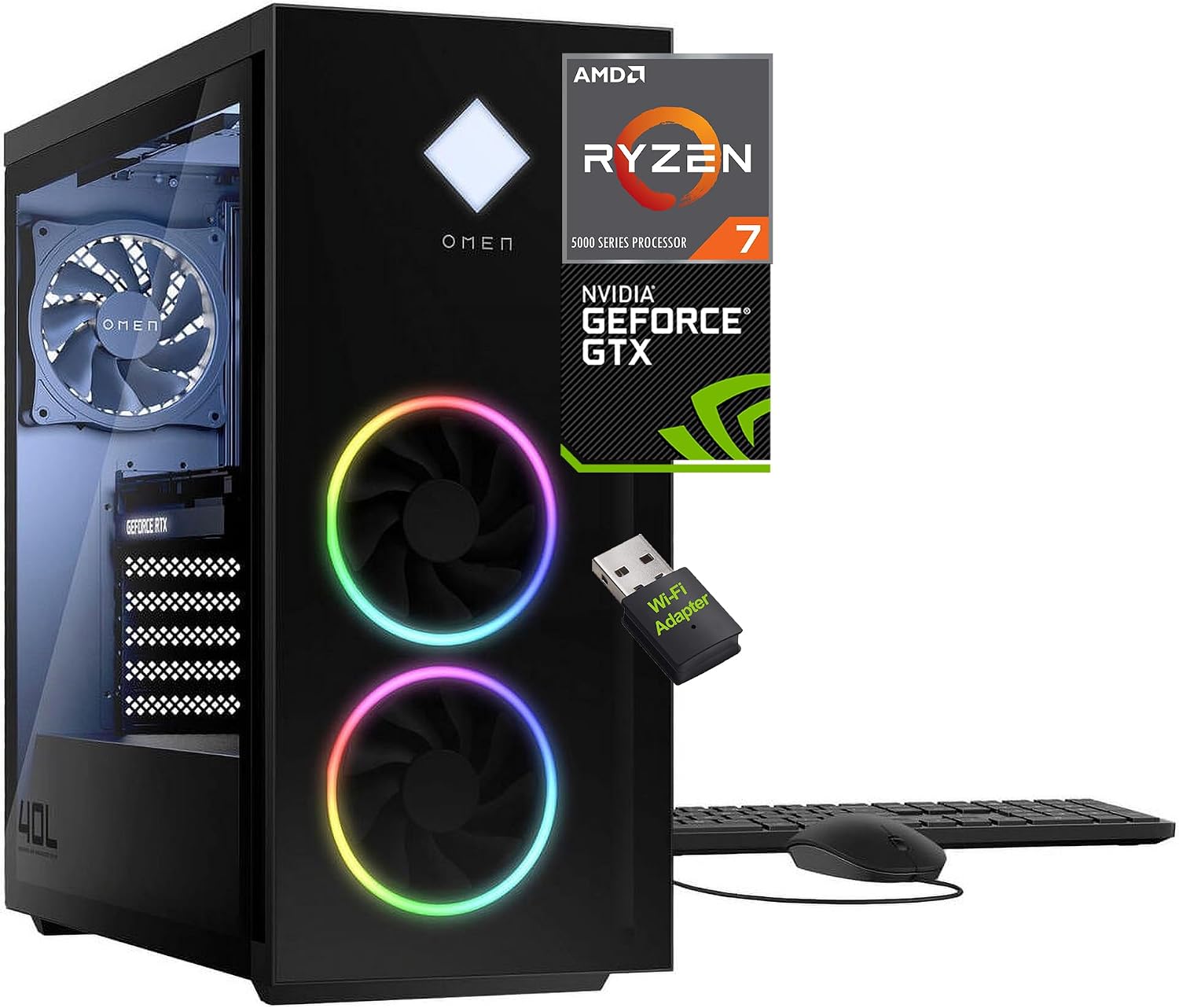
TLC vs. QLC NAND Flash Explained: Why Cheap SSDs Slow Down to 80 MB/s
TLC vs. QLC NAND Flash is one of the most consequential technical decisions when shopping for an SSD. We examine 3 bits (8 voltage states) vs. 4 bits (16 voltage states), demystify pseudo-SLC caching and why QLC write speeds plummet off a cliff to 80 MB/s during sustained transfers, evaluate 600 TBW vs. 220 TBW write endurance, assess drive performance when 80%+ full, and compare live retail pricing across Amazon, Best Buy, and Newegg.
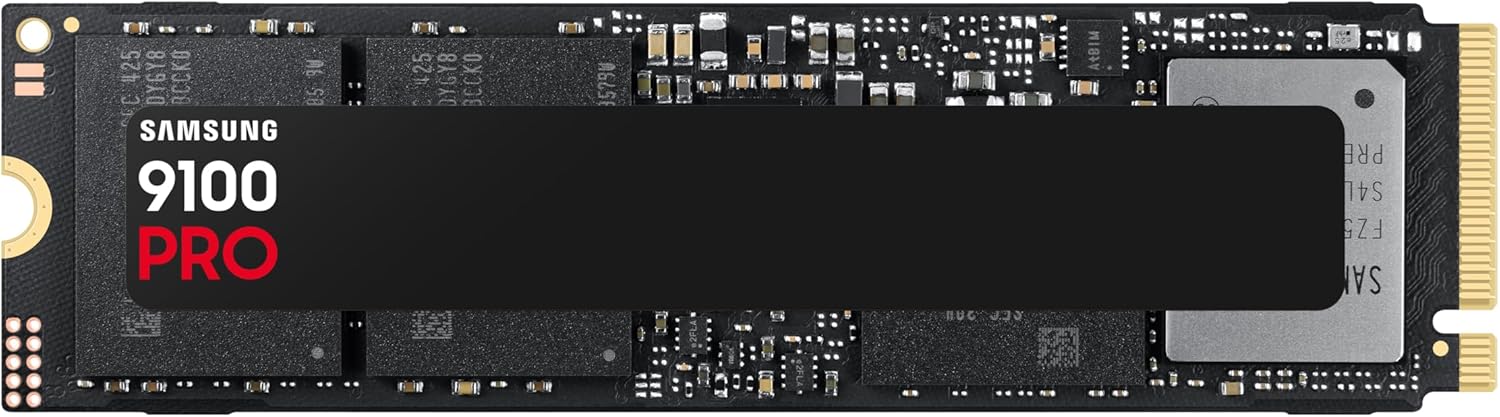
Samsung SSD 9100 PRO 1TB, PCIe 5.0x4 M.2 2280, Up to 14,700MB/s
Triple-Level Cell flash stores 3 bits per physical memory cell using 8 discrete voltage states. Delivers high sustained write speeds (450–1,500 MB/s post-cache), rock-solid endurance (600 TBW per 1TB), and zero performance degradation when full.
- Bits Per Cell: 3 bits ($2^3 = 8$ voltage thresholds)
- Sustained Write Post-Cache: 450 – 1,500 MB/s (5x–15x faster than QLC)
- Endurance (1TB / 2TB): 600 TBW / 1,200 TBW (Almost 3x QLC)
- Performance When 80%+ Full: Stable and responsive; no severe throttling
- Best Role: Primary OS boot drive, video editing, daily gaming
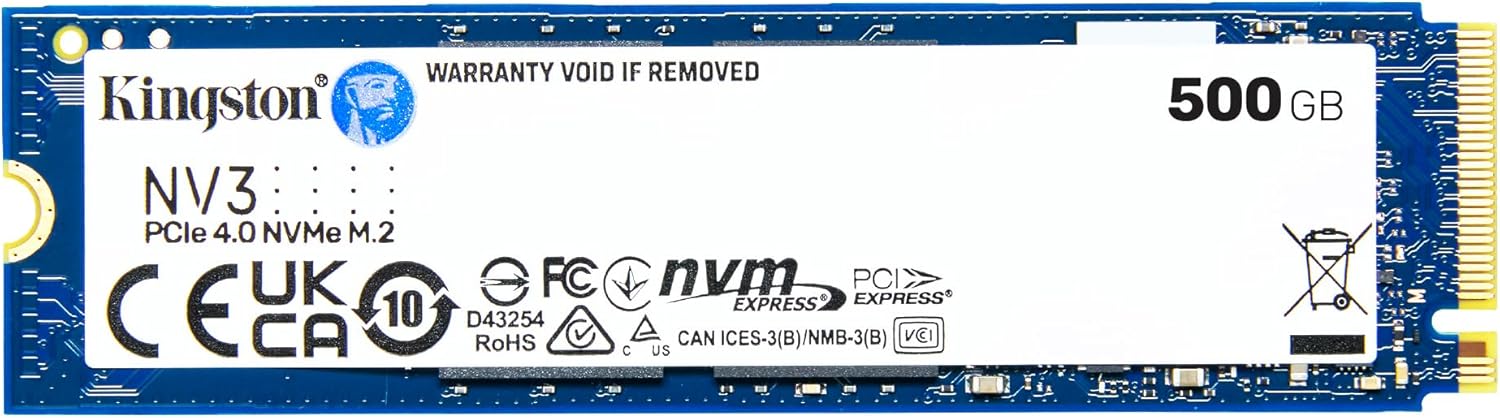
Kingston NV3 500GB M.2 2280 NVMe SSD | PCIe 4.0 Gen 4x4 | Up to 5000 MB/s | SNV3S/500G
Quad-Level Cell flash packs 4 bits into every cell (33% more data density) across 16 microscopic voltage thresholds. Fast during burst writes, but plummets to 70–120 MB/s once pseudo-SLC cache is exhausted.
- Bits Per Cell: 4 bits ($2^4 = 16$ voltage thresholds)
- Sustained Write Post-Cache: 70 – 120 MB/s (The QLC Cliff)
- Endurance (1TB / 2TB): 220 TBW / 440 TBW (Nearly 3x lower)
- Performance When 80%+ Full: Dynamic cache collapses; easy to choke
- Best Role: Secondary mass game library (4TB), read-only media
Side-by-Side Technical & Architectural Matrix
Examining the physics of electron trapping, sustained write cliff speeds, SLC cache behavior when full, and endurance ratings.
| Architectural Metric / Test | TLC NAND Flash (3-Bit) | QLC NAND Flash (4-Bit) | Practical Impact & Verdict |
|---|---|---|---|
| Bits Stored Per Physical Cell | 3 bits per cell | 4 bits per cell (+33% density) | QLC enables higher capacity per wafer, lowering manufacturing costs. |
| Voltage Charge States to Distinguish | 8 voltage states ($2^3$) | 16 voltage states ($2^4$) | QLC requires microscopically narrow charge margins; much harder to write. |
| Native Direct-to-Flash Write Speed | 450 – 1,500 MB/s | 70 – 120 MB/s (The QLC Cliff) | Massive disparity: Post-cache QLC writes slower than a 2012 HDD! |
| Peak Burst Write (Within SLC Cache) | 4,000 – 6,900 MB/s | 3,000 – 5,000 MB/s | Both feel blisteringly fast as long as writes stay inside the pseudo-SLC buffer. |
| Game Loading & Read Speeds | 4,150 – 7,450 MB/s Read | 3,500 – 5,000 MB/s Read | Reading is unaffected: QLC game load times are virtually identical to TLC! |
| 1TB / 2TB Endurance Rating (TBW) | 600 TBW / 1,200 TBW | 200 – 220 TBW / 440 TBW | TLC provides almost 3x higher write endurance before cells degrade. |
| Dynamic SLC Cache Size (Empty Drive) | ~80GB – 140GB (Balanced) | ~250GB – 280GB (Massive dynamic buffer) | QLC drives allocate huge dynamic buffers when empty to disguise slow native flash. |
| SLC Cache Size When 80%+ Full | ~15GB – 30GB (Falls back to 450+ MB/s) | ~5GB – 12GB (Hits 80 MB/s wall immediately) | The Trap: A nearly full QLC drive throttles even on small 15GB downloads. |
| 1 Gbps Fiber Internet Download Impact | Zero throttling (Writes faster than 125 MB/s) | Throttles download! (80 MB/s < 125 MB/s) | Steam downloads pause or throttle because the QLC drive cannot write fast enough. |
| 4TB Capacity Availability & Pricing | $230 – $280 (Premium cost) | $179 – $219 (Extremely accessible) | QLC dominates affordable high-capacity 4TB secondary storage. |
| Recommended Roles | Primary OS drive, content creation, high writes | Secondary game library, media storage, 4TB drives | Never use QLC as your primary workstation boot drive; excellent as secondary. |
1. The Physics of NAND Flash: Why Squeezing 1 Extra Bit Ruined Write Speeds
Every solid-state drive stores data as electrical charges trapped inside microscopic microscopic transistors (floating gates or charge trap cells). The fundamental difference between TLC and QLC comes down to basic electrical engineering:
- SLC (Single-Level Cell): 1 bit per cell = 2 voltage states (charged or uncharged). Lightning fast, virtually indestructible.
- MLC (Multi-Level Cell): 2 bits per cell = 4 voltage states.
- TLC (Triple-Level Cell): 3 bits per cell = $2^3 = \mathbf8$ discrete voltage states.
- QLC (Quad-Level Cell): 4 bits per cell = $2^4 = \mathbf16$ discrete voltage states.
2. The Pseudo-SLC Caching Illusion & The 80 MB/s Cliff
If native QLC flash is inherently so slow, how can manufacturers like Crucial, Kingston, or Solidigm market their QLC SSDs with advertised write speeds of 3,500 to 5,000 MB/s?
The answer is pseudo-SLC (pSLC) caching. The SSD controller tricks the flash by treating empty QLC cells as 1-bit SLC cells, writing only two voltage states (0 or 1). Because 1-bit programming requires zero precision, incoming data enters the cache at 3,000–5,000 MB/s.
On an empty 1TB QLC drive, the dynamic cache can be huge—often 250GB to 280GB. If you are copying a 10GB photo album or installing a 30GB indie game, the transfer finishes completely within the SLC cache. You walk away thinking you purchased a blisteringly fast drive.
- It must read data from the filled SLC cache and fold it into dense 4-bit QLC blocks.
- It must write incoming data directly into raw QLC cells.
3. The Shrinking Cache Trap: Why Full QLC SSDs Choke Windows
The most insidious characteristic of budget QLC drives is what happens as you fill the drive up. Because the pseudo-SLC cache is dynamic (carved out of free, unallocated space), the size of the fast write cache shrinks dramatically as storage fills:
- 0% Full (Brand New Drive): ~260GB SLC cache (Takes a massive file to exhaust).
- 50% Full (Half Full): ~120GB SLC cache (Noticeable slowdowns on large game installs).
- 80% Full (Typical Working State): Only 10GB to 15GB SLC cache!
When an 80% full QLC SSD has only a 12GB cache, downloading a simple 20GB patch or moving a video file instantly overflows the buffer. The entire drive throttles to 80 MB/s, disk queue depth hits 100%, and your Windows operating system experiences micro-stutters, mouse lag, and application freezes.
By contrast, a quality TLC drive (like the WD Blue SN580 or Samsung 990 PRO) retains a robust direct-to-TLC write floor of 450 to 1,500 MB/s even when its cache is 100% empty. It never drops below several hundred megabytes per second, keeping Windows completely fluid.
4. Endurance (TBW) Realities: Will QLC Flash Die Prematurely?
Because writing 16 voltage states places extreme stress on the microscopic insulating oxide layer of each cell, QLC flash degrades significantly faster than TLC:
TLC Endurance (600 TBW per 1TB)
Rated for roughly 1,500 to 3,000 Program/Erase (P/E) cycles. To exhaust a 600 TBW drive within a 5-year warranty, you would need to write 328GB of data every single day for five consecutive years. Virtually impossible for normal users.
QLC Endurance (200–220 TBW per 1TB)
Rated for only 500 to 1,000 P/E cycles (nearly 3x lower). Writing 110GB per day will exhaust the warranty within 5 years. While plenty for light gaming, content creators writing hundreds of gigabytes of raw video files can prematurely age QLC flash.
5. The Read Exception: Why QLC Is Actually Great for a 4TB Steam Library
With all these drawbacks, why does QLC exist, and why is it wildly popular?
Because of one critical physical property: reading from QLC is fast!
Reading data does not alter cell charge; it merely senses electrical voltage. Reading 4 bits from a QLC cell takes almost the same time as reading from TLC. A modern PCIe 4.0 QLC drive (like the Crucial P3 Plus) reads data at up to 5,000 MB/s.
The Verdict: Which Flash Type Should You Buy?
🛡️ Insist on TLC (Gold Standard) If:
- It is your primary Windows OS boot drive: Windows demands steady random 4K write speeds and background consistency.
- You have fast 1 Gbps fiber internet: QLC will literally throttle your Steam download speeds to 80 MB/s during large game installs.
- You do video editing or content creation: Exporting raw 4K footage or moving project files requires sustained gigabyte-per-second writes.
- You keep drives nearly full: TLC maintains 450+ MB/s speeds even past 85% capacity with a depleted SLC cache.
- Price parity is close: In 2026, 1TB TLC drives like the WD Blue SN580 cost within $5 of QLC drives ($59 vs $54).
💾 Consider QLC (Budget Mass Storage) If:
- You need a massive 4TB secondary gaming drive: QLC drives like the Crucial P3 Plus offer 4TB for ~$190, saving $70 over TLC.
- It is purely a secondary game library: Game loading screens read at 5,000 MB/s, completely immune to the slow write speeds.
- You use it for cold media archives: Storing 4K movies, photos, and music where you write files once and read frequently.
- You don't mind overnight game pre-loads: If you don't mind large game updates taking an extra 10–15 minutes, QLC saves money.
Live Storage & SSD Deals From Our Catalog
Real-time verified pricing across top retailers updated daily by our deal hunter algorithms.
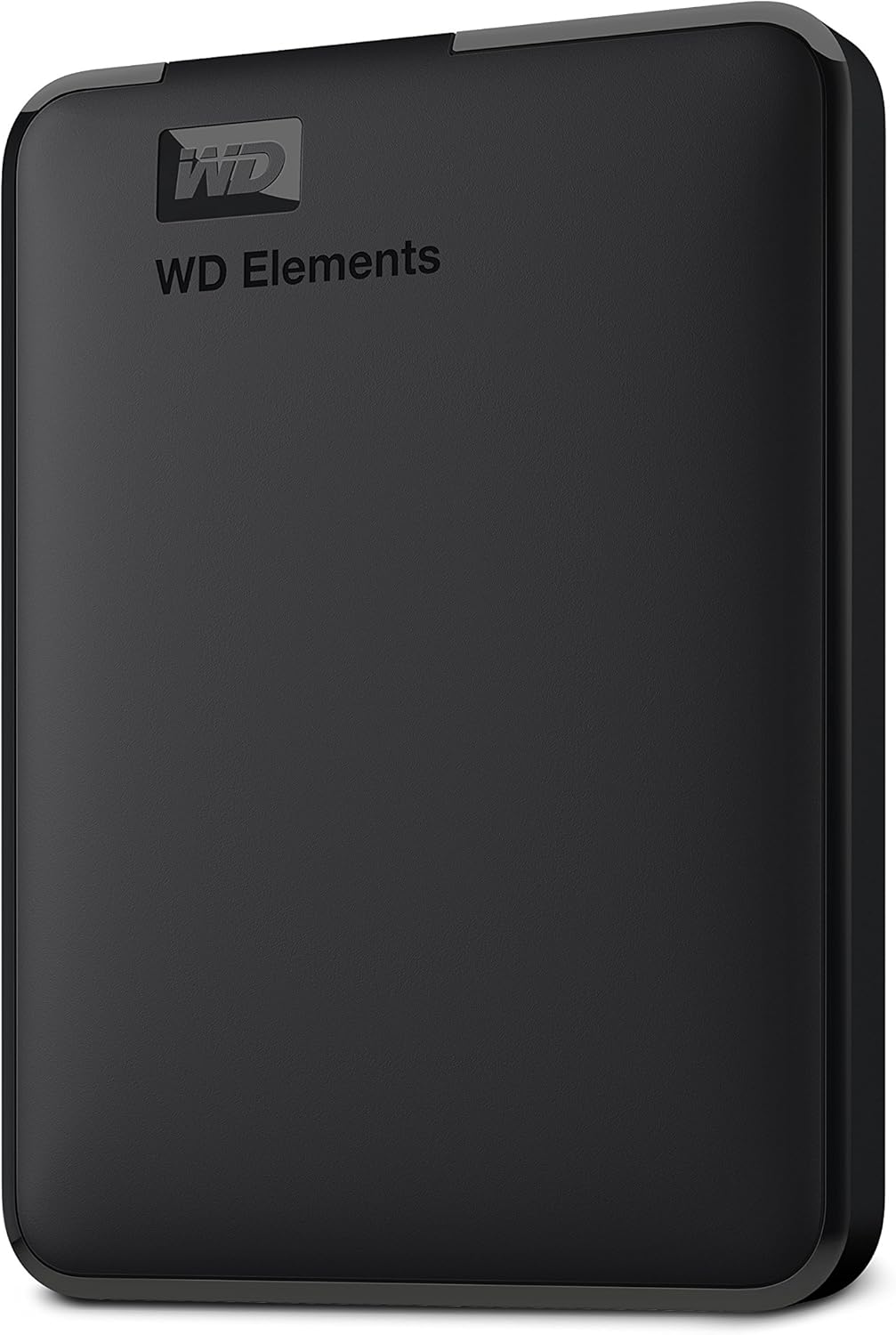
WD 6TB Elements Portable External Hard Drive for Windows, USB 3.2 Gen 1/USB 3.0 for PC & Mac, Plug and Play Ready - WDBHJS0060BBK-WESN
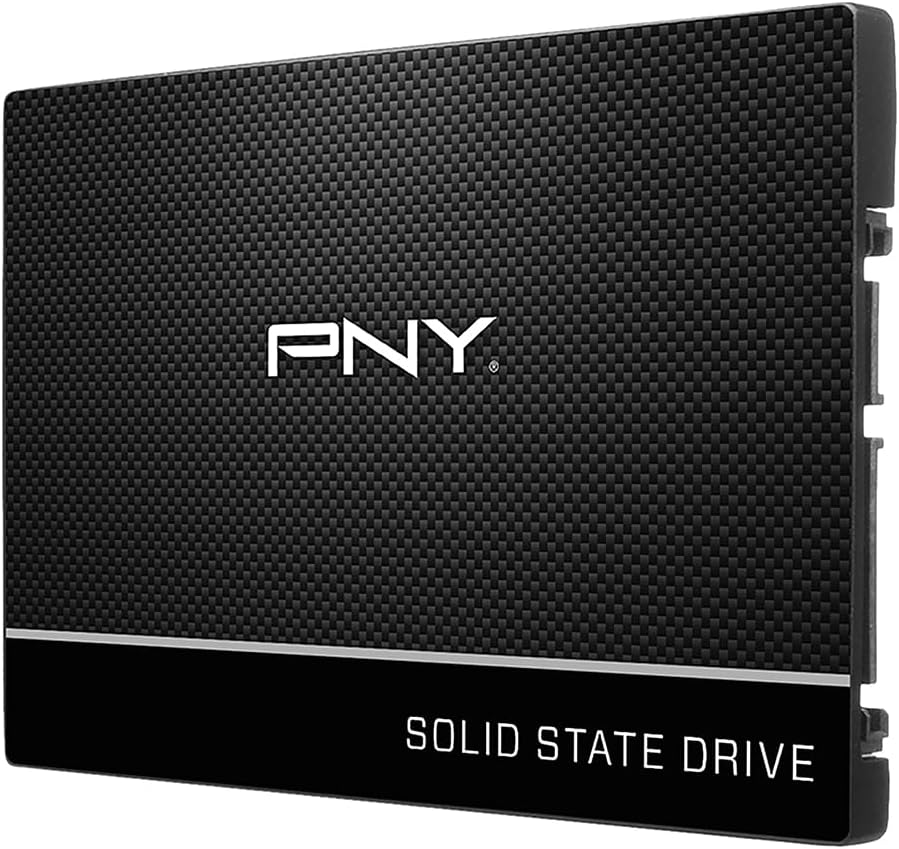
PNY CS900 250GB 2.5" SATA III Internal SSD
Lenovo IdeaCentre 24" Business All-in-One Desktop, 16GB RAM 512GB SSD